Facts and Myths About Translators: Is Speaking Two Languages Enough?
Your colleague speaks fluent English. An AI application can also translate documents in seconds. Does that mean your translation needs are already covered?
For a general understanding of a text, either option may be sufficient. But what if you need to translate a contract, research report, or technical manual for professional use?
This is where translator expertise and a thorough review process become important. A translation that reads smoothly may still fail to convey all the information accurately.
To help you choose an appropriate service, let’s explore five common myths about the translation profession and the facts behind them.
1. Does Speaking Two Languages Automatically Make Someone a Translator?
Myth: “Anyone who speaks two languages can produce a professional translation.”
Fact: Knowing two languages is a starting point. Translators also need writing skills, contextual understanding, research skills, and attention to detail.
Someone may understand a conversation in English but struggle to translate a contract into Indonesian using the correct terminology. Understanding information and expressing it accurately in another language are different skills.
A professional translator must preserve the meaning, use terminology consistently, and write naturally in the target language. When a document contains specialized terms or ambiguous sentences, the translator also needs to research the context and consult relevant sources.
When choosing translation services, consider the translator’s experience with similar documents. Fluency in conversation alone is not enough to assess translation ability.
2. Is Translation Simply About Replacing Words?
Myth: “An accurate translation must follow every word in the source text.”
Fact: Translation accuracy depends on conveying the intended meaning, rather than reproducing the original word order.
Consider the expression “Please bear with us.” When asking someone to wait, the Indonesian phrase “Mohon bersabar,” meaning “Please be patient,” conveys the intention more effectively than a word-for-word translation.
Similar challenges arise in document translation. A term may have different meanings in everyday conversation, a contract, or a financial report. Translators need to understand the context before choosing an appropriate equivalent.
The purpose of the document also affects how the message should be expressed. Training instructions need to be easy to follow, contracts require precise terminology, and public communications should be engaging and accessible.
A translated sentence may therefore have a different structure from the original. These adjustments help preserve the meaning, purpose, and level of formality in the target language.
3. If AI Translations Read Smoothly, Are Translators Still Necessary?
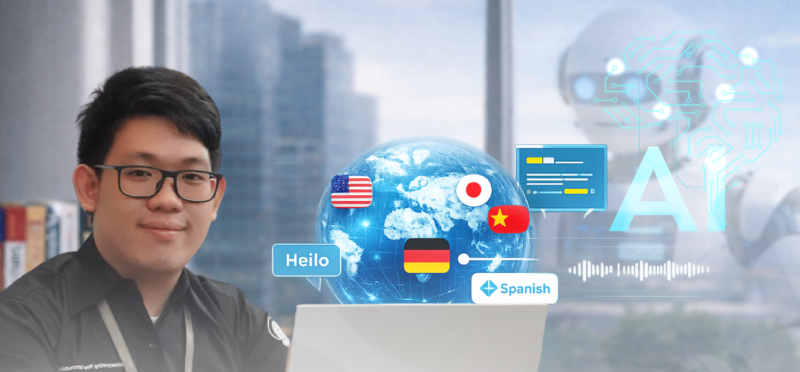
Myth: “AI and machine translation can fully replace translators.”
Fact: Technology can speed up the process, but its output still needs to be assessed against the context and intended use.
Well-written sentences can look convincing. However, the terminology may still be incorrect. The word “charge,” for example, can refer to a fee, an accusation, or the act of charging a device. An incorrect equivalent may produce a fluent sentence that communicates a different meaning.
Reviewing a translation involves checking figures, completeness, and terminology consistency as well as meaning. A human translator plays an important role in assessing these aspects.
One approach is machine translation post-editing (MTPE), also referred to as PMTE (post-machine translation editing). In this process, a professional translator reviews and edits machine-generated translations for accuracy, terminology consistency, completeness, and readability. The aim is to meet the agreed quality requirements and the needs of the document.
The suitability of this approach depends on the document type, the quality of the initial output, and the risks associated with its use. For confidential documents, data handling and protection should also be discussed from the outset.
Before using a machine translation, consider whether you only need a general understanding of the text or plan to publish it or use it to make decisions. This distinction helps determine the level of review required.
4. Can Every Translator Handle Every Type of Document?
Myth: “As long as the language pair matches, any translator can work in any subject area.”
Fact: Subject knowledge and relevant experience help determine whether a translator is suited to your document.
A translator who regularly works on marketing materials may not have the same experience with medical documents. Likewise, a legal translator may be less familiar with technical manuals.
Each field presents its own challenges. Contracts require consistent terminology and an understanding of how clauses relate to one another. Medical documents contain clinical terminology, while technical manuals may include specifications and procedures that must be understood accurately.
Translation direction also matters. The ability to translate from English into Indonesian does not automatically indicate the same proficiency in the opposite direction.
Project management becomes another consideration when several translators are involved. A glossary, style guide, and final review help maintain consistency across the document.
Before choosing a service, you can ask:
- Does the team have experience in your document’s subject area?
- How are editing and quality checks carried out?
- How is terminology kept consistent when several translators are involved?
- Can the team accommodate your deadline?
5. Do All Official Documents Require Sworn Translation?
Myth: “If a document is official, it must be translated by a sworn translator.”
Fact: The need for sworn translation depends on the document’s intended use and the receiving institution’s requirements.
A company document used for internal reference, for example, may only require general translation. The requirements may change when the same document is submitted for a particular legal or administrative purpose.
A sworn translator’s appointment also does not automatically cover every language. The required language pair and translation direction need to fall within the scope of that appointment.
Sworn translation may not satisfy every submission requirement on its own. The receiving institution may also require legalization, an apostille, or other supporting documentation.
The most practical step is to confirm the requirements before translation begins. Ask about the target language, whether sworn translation is needed, the required delivery format, and any supporting documents. Doing so can help reduce the risk of having the work redone.
Find the Right Translation Service for Your Documents with Bahasa Global
Understanding the facts and myths about translators can help you assess services based on your document’s requirements. Start by sharing the language pair, subject area, intended use, volume, format, and deadline.
This information helps the translation service provider determine an appropriate approach, whether that involves general translation, sworn translation, MTPE, or an additional review.
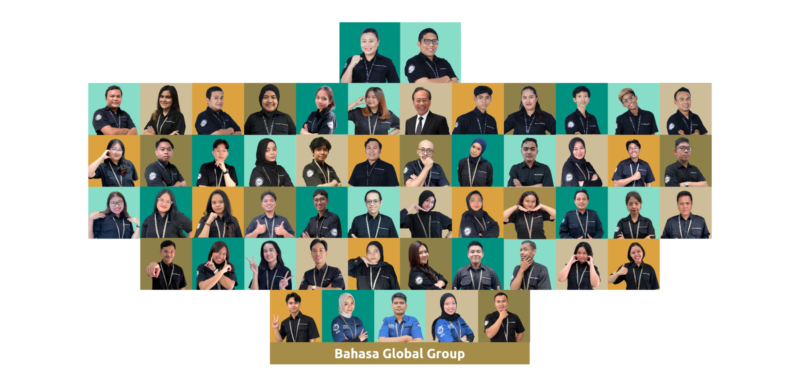
Bahasa Global has supported hundreds of Indonesian and international clients since its journey began in 2007. Between mid-2020 and March 2026, #BahasaGlobalTeam translated more than 16.7 million words into various languages, covering a wide range of subjects and document requirements.
Unsure which service is right for your documents?
#BahasaGlobalTeam is ready to help you choose an appropriate service to support accurate, consistent, and easy-to-understand translations.
Consult your translation needs with us today!
📩 Email: info@bahasaglobal.com
🌐 Website: bahasaglobal.com