

Don't Make the Wrong Choice! Here Are Tips for Choosing a Flexible and Trusted Professional Interpreter Service
The need for cross-lingual communication is becoming increasingly important in various aspects of life, ranging from business to personal matters. In situations involving two or more languages, interpreters play a crucial role. Put simply, an interpreter acts as a spoken language translator who helps convey messages directly between two parties speaking different languages.
Unlike document translators who handle written text, interpreters work in real-time during events such as business meetings, conferences, or international client assistance. Therefore, choosing an interpreter service must be done carefully. Selecting the wrong interpreter can lead to misunderstandings that could potentially damage your reputation, business deals, or professional relationships.

An interpreter is a professional tasked with orally translating communication from one language to another in real-time. This role is highly critical because interpreters do not just translate words, as they also convey nuance, intonation, and context that are often lost in written translation. Through this ability, interpreters ensure that the message delivered remains accurate and aligns with the original intent.
Some situations that require a professional interpreter include:
- Business meetings with international clients
- Seminars and conferences
- Partnership negotiations
- Company or institutional visits
- Expatriate assistance
Without a professional interpreter, cross-lingual communication can become a major challenge, which may even trigger costly miscommunications that could affect the organisation or company’s reputation or financial conditions.
Criteria for Choosing a Trusted Interpreter Service in Jakarta
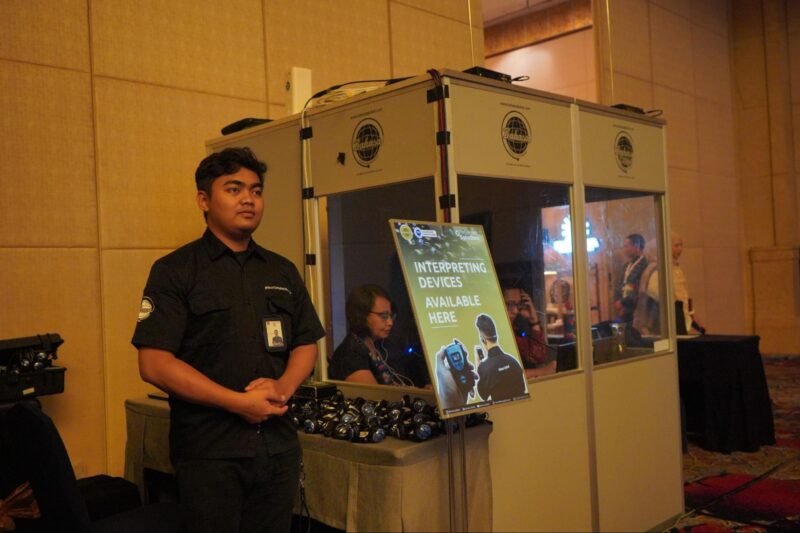
Finding an interpreter service in Jakarta is quite easy due to the many options available. However, there are several key criteria to consider ensuring you get the optimal quality for your specific needs:
1. Experience and Industry Specialization
Experience is the first thing to look out for. An experienced interpreter has usually handled various situations and understands the dynamics of cross-lingual communication much better. For instance, an English interpreter with a business background will be more adept at translating technical terms and handling complex discussions.
Some interpreters specialize in specific sectors such as law, medicine, technology, or finance. Matching the interpreter’s specialization with the context of your event ensures a more accurate and relevant interpretation. Therefore, make sure the service provider has a database of interpreters with backgrounds that match your event’s topic.
2. Certification and Professionalism
It is important to ensure that the service provider works with certified professionals or members of official professional associations. Certification serves as formal proof that the interpreter has undergone intensive training and meets the qualifications required to handle complex oral translation.
Beyond certification, professionalism is equally vital. Professional interpreters must be able to maintain confidentiality, remain neutral during debates or conflicts, and work under tight schedules. Choosing an interpreter with a strong reputation and high professional standards ensures that your cross-lingual communication runs smoothly.
3. Service Flexibility
Service flexibility is a primary quality to consider when choosing an interpreter provider. International business and large-scale events often require quick adjustments, such as sudden changes in schedules or formats. A flexible interpreter is always ready to work under various conditions, such as:
- Onsite and remote services (e.g., for virtual conferences or remote meetings)
- Adjusting to time and location changes on short notice
- Handling urgent and specific requests (e.g., sudden changes in sessions or a new speaker)
A service provider that offers flexibility can manage urgent needs much better, reducing the risk of communication bottlenecks.
4. Reputation and Client Testimonials
Be sure to check past client testimonials, both on the provider’s website and independent platforms. These reviews offer insights into previous clients’ experiences regarding translation quality, professionalism, and adaptability to specific needs.
An interpreter service provider with a good reputation usually boasts positive reviews and a diverse client portfolio. A proven track record with major clients, such as government agencies, multinational corporations, or NGOs, shows that the provider is well-accustomed to strict protocols and high-pressure environments.
Why Choose Our Service?
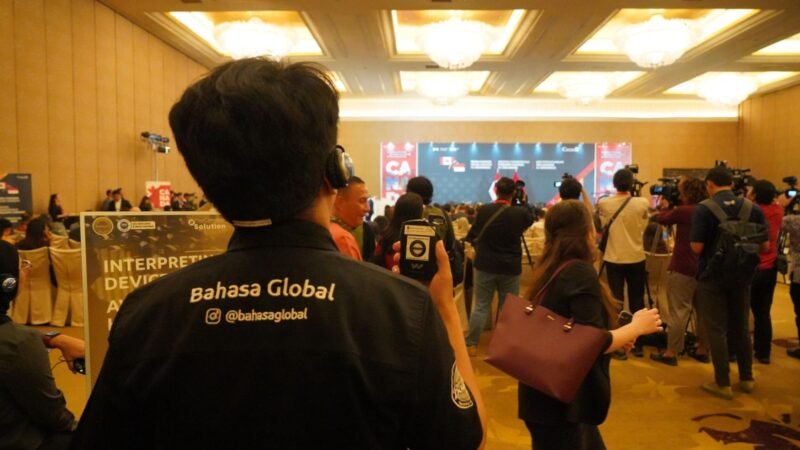
Choosing an interpreter service is not just about “who can translate,” but who can truly help your communication flow seamlessly. Backed by over a decade of experience in the language services industry, we have deployed 6,800+ professional interpreters to assist multinational companies, government agencies, academic institutions, and individuals in bridging language barriers.
Here is why clients choose us:
- Experienced conference interpreters with diverse international and industry backgrounds.
- High-quality simultaneous interpretation equipment, including soundproof booths, participant headsets, and transmission systems.
- A strict interpreter selection process to ensure the perfect match for your event’s topic and needs.
- On-site technical support team during the event to minimize any risk of technical glitches.
We are committed to being a reliable communication partner for all your event and documentation needs, supported by experienced professional interpreters and flexible, trusted services.
Want your event to run smoothly without any language barriers?
Consult your needs with #BahasaGlobalTeam today!
📩 Email: info@bahasaglobal.com
🌐 Website: bahasaglobal.com