

Grammatically Correct but Still Hard to Read? It’s Time to Get to Know Copy Editing!
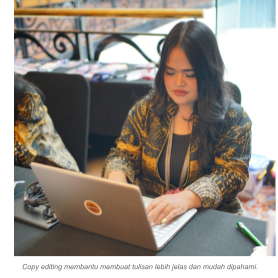
Once you have reviewed a report before sending it and found no typos, with the punctuation in order and the grammar appearing correct, you may still notice that some sentences feel awkward when you read it again. Certain parts may need to be reread to understand the meaning clearly, while other explanations may seem longer than necessary.
This situation is familiar to anyone preparing reports, articles, or communication materials. Writing that is grammatically correct is not always easy to understand. Sometimes, the problem lies in the word choice and the way sentences are structured.
Consider the following example:
“In order to support the implementation of activities aimed at improving participants’ capacity, this activity is carried out as part of efforts to improve participants’ understanding.”
The same message can be expressed more simply:
“This activity is designed to improve participants’ capacity and understanding.”
Readers can understand the purpose of the activity without having to work through repeated wording. Improvements like this are part of copy editing or manuscript editing, which involves refining awkward words and sentences so that the writing becomes clearer, more consistent, and easier to read without changing the author’s intended meaning.
Other Articles Preventing Awkward Silence: The Crucial Role of Interpreters as Cultural Bridges in the Meeting Room
Why Can Correct Writing Still Be Difficult to Understand?
When reviewing a text, our attention often goes directly to spelling and grammar. Sentences that appear technically correct may be passed over quickly. However, they may still be too long, use less suitable wording, or repeat information that has already been explained.
For example, a report may use “customer” in one section, “consumer” in another, and a different term in a table. None of these terms is necessarily wrong, but readers may wonder whether they refer to the same group. An editor needs to review the context before deciding whether the terminology should be standardized.
The same applies to job titles, abbreviations, numbers, and dates. Small inconsistencies can distract readers when they appear repeatedly. Document editing helps organize these details so readers can focus on the content rather than being distracted by the way it is presented.
What Is Improved During Copy Editing?
A copy editor or manuscript editor helps improve writing that is incorrect, awkward, or difficult to understand. Their work may include grammar, word choice, sentence structure, terminology consistency, and writing style. Every change should consider the purpose of the document and its intended audience.
For example, the sentence “The implementation of the evaluation is carried out by the team every month” can be revised to “The team conducts an evaluation every month.” The information remains the same, but the sentence becomes more direct. Small improvements like this can make a report easier to read, especially when similar sentence structures appear repeatedly.
When reviewing a manuscript, an editor may also consider:
- Is the meaning of the sentence clear?
- Are any words or explanations repeated unnecessarily?
- Is terminology used consistently?
- Is the writing style appropriate for the intended audience?
- Is the connection between sentences easy to follow?
However, a copy editor does not need to change every sentence. Parts that are already clear and appropriate can remain as they are. If the author’s intended meaning is unclear, the copy editor should ask for clarification so the revision does not alter the information.
The Sentence Is Clear, but Is the Flow Easy to Follow?
Short sentences do not automatically make writing easier to understand. Readers also need to see the connection between one piece of information and the next. If the order is unclear or an explanation is missing, they may still have to guess what the text means.
For example:
“Registration closes on Friday. Participants will receive a link by email. The form must be completed.”
The information is easier to follow when written as:
“Participants will receive the registration form link by email. The form must be completed by Friday.”
In this example, the copy editor clarifies that the link sent by email is used to access the registration form. The deadline is also placed after the information about the form, making it easier for readers to understand what they need to do and when they need to complete it.
Multiple Writers, One Consistent Writing Style
Reports or organizational publications are often prepared by several contributors. As a result, the writing style may vary. One section may sound highly formal, while another feels more casual. Abbreviations that were already introduced earlier may be explained again, while the same term may be written differently across sections.
Through copy editing, these differences can be aligned so that the entire document feels cohesive. A copy editor reviews terminology, level of formality, abbreviations, and writing conventions. The goal is to help readers move through the document comfortably from beginning to end.
If an organization has a style guide or writing guide, it can serve as a reference during the copy editing process. Common elements may include:
- Preferred terminology and abbreviations;
- Capitalization;
- Number and date formats;
- The organization’s writing style.
Clear references help maintain consistency, including when a document is prepared by multiple contributors.
Do Not Confuse Copy Editing with Proofreading!
Copy editing and proofreading both support writing quality, but they focus on different aspects. Copy editing improves awkward words and sentences, clarifies the message, and aligns terminology and writing style. This process is needed when a text still requires improvement to make it easier to read.
Meanwhile, proofreading or final review focuses on errors that remain after editing is complete. These may include typos, spelling, punctuation, and numbering. At this stage, the content and sentence structure are generally already agreed upon, so the required changes are more limited.
If a sentence is still complicated or difficult to follow, the document needs copy editing. If the sentence is already clear but contains a missing letter or punctuation error, the issue can be corrected through proofreading. You can also read our discussion on the difference between copy editing and proofreading to better understand the focus of each service.
Will Copy Editing Change the Author’s Writing Style?
Some authors worry that editing will make their writing lose its distinctive voice. This concern is understandable, especially when the author already has a particular writing style. For this reason, a copy editor needs to understand the character of the writing before making changes.
Formal documents can still use simple and professional language. Articles intended for the general public can be made easier to understand without removing important information. Technical terminology can also be retained when necessary and explained according to the needs of the audience.
Good editing helps the author’s message come across more clearly. The language should remain appropriate for the purpose of the text, whether it is a corporate report, research publication, or communication material for the public. Simplicity and professionalism can work together.
Make Your Message Clearer with Bahasa Global!
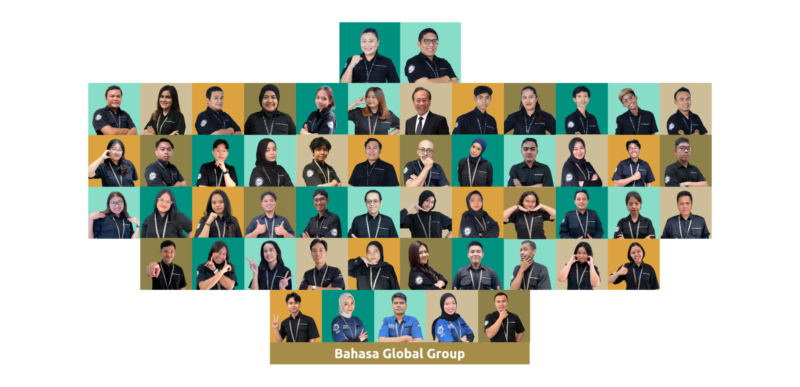
#BahasaGlobalTeam is ready to support the copy editing and proofreading of your documents.
Before a document is sent or published, try reading it from the perspective of someone seeing it for the first time. Is the meaning immediately clear? Are there any sections that need to be read again? These simple questions can help identify parts that may still need improvement.
Bahasa Global provides copy editing services and proofreading services for reports, articles, publications, communication materials, and various professional documents. Editing may include improving awkward sentences, aligning terminology and writing style, and checking for remaining errors according to the scope of service.
Is your document grammatically correct but still difficult or uncomfortable to read?
Send us your document along with information about the language, intended use, volume, and deadline. Bahasa Global is ready to review your needs and help determine the most suitable editing service.
Consult your document editing needs with us today!
📩 Email: info@bahasaglobal.com
🌐 Website: bahasaglobal.com