How Interpreters Support Effective Communication in International Training
In August 2026, an international organization held a Forensic Accounting training program in Bandung, bringing together trainers and participants from different language backgrounds. The trainers delivered the sessions in English, while some participants primarily communicated in Indonesian.
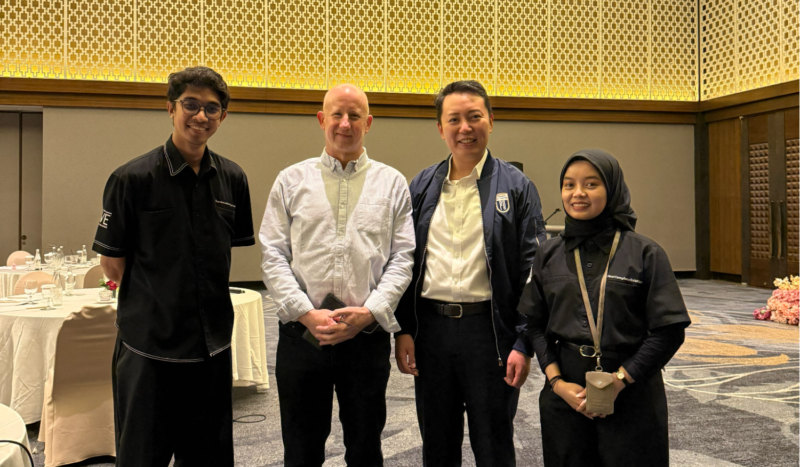
In this setting, interpreters played an important role in keeping communication flowing smoothly. Participants were able to follow the sessions in real time through interpretation receivers provided during the event, while the trainers could understand questions raised by participants in Indonesian.
Interpreters were particularly valuable during discussion sessions. Participants’ questions could be interpreted immediately, allowing the trainers to understand what was being asked and provide relevant responses. At the same time, participants were able to follow the training more easily and engage more actively in discussions with the trainers.
This experience highlights an important point: interpreters do more than translate words from one language into another. They help ensure that messages are understood by everyone involved. Effective interpretation helps bridge communication gaps and can become one of the key factors contributing to a successful event.
Why Are Interpreters Important in Training Programs?
Effective training is not simply about delivering materials and completing a program. A successful training session involves asking questions, exchanging ideas, discussing different perspectives, and sharing knowledge—all of which make the learning process more meaningful.
Language differences can become a barrier to this process. Participants may be comfortable with everyday conversations in English but still find it challenging to follow training materials that involve specialized or technical terminology. At the same time, trainers need an effective way to understand participants’ questions, comments, and feedback.
Without clear communication, participants may miss important information, while trainers may lose valuable opportunities to engage with their audience. This is where interpreters serve as a bridge between languages and people.
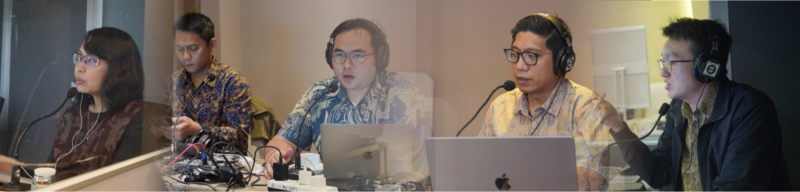
Interpreters Enable Two-Way Communication
In a training session where trainers and participants use different languages, interpretation works in both directions.
Trainer → Interpreter → Participants
The trainer delivers the material in English. The interpreter conveys the message to participants in real time, allowing them to understand the content without having to wait for a translation after the session has ended.
Participants → Interpreter → Trainer
When a participant asks a question in Indonesian, the interpreter conveys the question to the trainer. Once the trainer responds, the interpreter communicates the answer back to the participant.
This seemingly simple process allows trainers and participants to remain part of the same conversation. Participants are not merely listening—they can understand, ask questions, respond, and take an active part in the discussion.
Real-Time Interpretation Helps Participants Stay Focused
One of the main advantages of using interpreters during training is the ability to communicate information in real time. Participants do not have to mentally translate every sentence delivered by the trainer. Instead, they can focus more fully on the content, explanations, and discussions.
With simultaneous interpretation, participants can receive the interpreted audio through Bahasa Global’s interpretation receivers. These devices allow participants to listen to the interpretation while the trainer continues speaking.
For training programs that involve technical subjects or participants from different language backgrounds, this type of support can help create a more comfortable, accessible, and inclusive learning environment.
When Participants Feel More Confident to Ask Questions
One indication of effective communication during a training session is when participants feel comfortable asking questions.
Imagine a participant who understands the general material but still needs clarification. They would prefer to ask their question in Indonesian, while the trainer communicates in English.
With an interpreter present, this language difference no longer has to become an obstacle. Participants can ask questions in the language they are most comfortable using. The interpreter conveys the question to the trainer, and the trainer’s response is then interpreted back to the participant.
As a result, the question-and-answer session does not have to stop because of a language barrier. Instead, discussions can become more interactive and productive.
Interpreters Are Needed Beyond Training Sessions
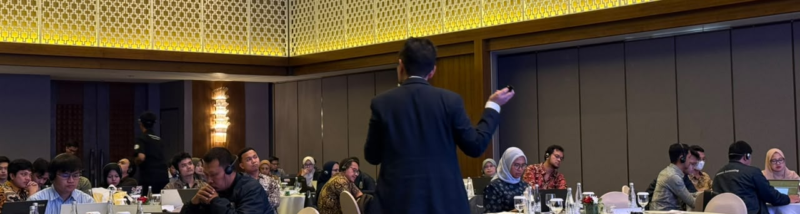
The need for cross-language communication exists across many professional settings. Government institutions and NGOs may work with international speakers or delegations. Multinational companies may hold meetings involving teams from different countries. Event organizers may host conferences with international speakers, while educational and training institutions may invite instructors from overseas.
In these situations, professional interpreting services help ensure that information is clearly understood and communication continues effectively.
The type of interpretation required may vary depending on the event, ranging from simultaneous interpretation and consecutive interpretation to remote simultaneous interpretation (RSI). For this reason, language and interpretation requirements should ideally be considered from the early stages of event planning.
Choosing the Right Interpreting Service
Choosing an interpreting service for an event should not be based solely on language proficiency. Several important factors should also be considered:
- The languages used during the event
- The type and format of the event
- The subject matter or industry involved
- Specialized terminology used during the sessions
- The number of participants
- The interpretation method required
- Equipment requirements, such as receivers and transmitters
- The interpreter’s experience in the relevant field
An interpreter who understands the context and subject matter of an event can help maintain accuracy while ensuring that communication remains natural and easy to follow.
Different Languages Should Not Stop the Conversation
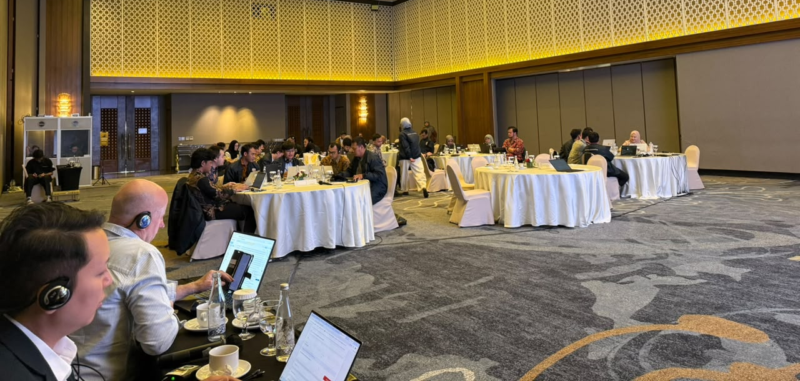
Returning to the Forensic Accounting training program in Bandung, participants were able to actively engage in discussions, while communication between trainers and participants continued in both directions.
Ultimately, the success of a training program is not determined solely by how well the material is presented. Equally important is whether everyone involved can understand the message and actively participate in the learning process.
Language differences should not become a barrier. With the right interpreter, trainers can share their expertise, participants can understand the material, questions can be communicated clearly, and discussions can continue seamlessly in real time.
Because interpreters do more than translate languages. They connect people, messages, and understanding.
Want to make sure your event runs smoothly without language barriers? Consult your interpreting needs with #BahasaGlobalTeam today.
📩 Email: info@bahasaglobal.com
🌐 Website: bahasaglobal.com