


Understanding Simultaneous Interpretation System (SIS): Real-time Translation Technology for International Events

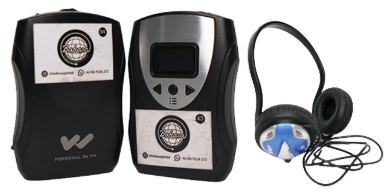
Have you ever seen tools like in the pictures above? In some international conferences, webinars, meetings, and other events that invite foreign speakers.
In an increasingly interconnected world, language often becomes the main challenge in international cooperation. Imagine a conference with participants from various countries, where each speaks different languages. Without an appropriate translation, communication will get stuck.
Imagine an international conference with participants ranging from government officials, experts, and global organization representatives. Each participant speaks a different language. Without an effective translation system, communication might get stuck simply because of language differences. This is where the Simultaneous Interpretation System becomes important. It bridges interlingual communication in real time, so that it delivers every message without significant loss of meaning.
This is why the Simultaneous Interpretation System (SIS) has become an important element of international events. This technology enables participants from various linguistic backgrounds to understand speakers in real time with instant translation, without pauses or interference.
What is a Simultaneous Interpretation System (SIS)?
According to the International Association of Conference Interpreters (AIIC), interpreters officially used the first simultaneous interpretation system during the Nuremberg Trials (1945–1949). At that time, they aimed to ensure that every judge, lawyer, and witness from various countries could communicate effectively.
Nowadays, many international events use the same principle, including UN meetings, economic forums, international business conferences, and government or education activities.
How Does the System Work?
Here’s how SIS (Simultaneous Interpretation System) works:
- The speaker talks normally through the microphone.
- The interpreter listens to the speaker through a headset inside a soundproof booth.
- The interpreter simultaneously verbalizes the translation. The transmitter sends the interpreter’s voice to the receivers used by the participants.
With this system, participants communicate across languages in real time. The process remains efficient, fast, and does not interrupt the event flow.
SIS has several main components:
- Interpreter booth (soundproofed): where the interpreter translates speech in real time.
- Transmitter: sends sound signals to the receivers.
- Receiver: participants use this device to listen to translations in their preferred language.
Microphone and special headset: ensure clear and interference-free sound.
In practice, the interpreter listens to the speaker through a headset and delivers the translation into the microphone. The system then transmits the audio to participants through a wireless sound system. All these processes happen instantly, which is why people call SIS “real-time translation technology”.
Why SIS is Important for Your Event
- Increase the effectiveness of international communication. With SIS, every participant can understand the materials without language barriers. This improves active participation and cross-cultural understanding.
- Promote the credibility of the event. Institutions or organizations that use simultaneous interpretation systems demonstrate professionalism and readiness to engage international audiences.
- Save time and support the dynamism of the event. Since interpreters translate speech simultaneously, discussions flow smoothly without long pauses.
Simultaneous Interpretation System is not just about technology. It also enables effective, accurate, and humane cross-cultural communication. In this fast globalized era, SIS becomes an important bridge that helps people understand every word, idea, and message without language barriers.
As Dr. Franz Pöchhacker, an interpretation expert from the University of Vienna, explains: “Interpretation is not just about translating words, it’s about connecting worlds.”
Are you organizing an international conference or multilingual event? Make sure your interpretation system supports cross-cultural communication. In a globalized world, language does not act as a barrier. Instead, it becomes a bridge to broader collaboration.
If you want to learn more about SIS, contact Bahasa Global and visit us to explore the world of interpretation.
🔗 Bahasa Global | www.bahasaglobal.com