Often Confused? Here’s the Difference Between Copyediting and Proofreading to Make Your Documents Error-Free!
Have you ever read an official report with excellent data, only to find yourself re-reading a single sentence multiple times just to grasp its meaning? Or perhaps you have come across a formal document with several typos right on its very first page? Issues like these usually happen when documents are rushed to release without going through a strict language-filtering process.
Writing the content of a document and ensuring that it is comfortable to read are two entirely different things. When a draft is distributed in an untidy condition, readers will focus more on those technical glitches rather than the substance of the information you intend to convey.
To ensure documents are clean and error-free, two text-checking terms are well-known in the professional world: copyediting and proofreading. To prevent your organization or company from choosing the wrong type of handling, let us break down the fundamental differences between these two services.
Understanding Copyediting and Proofreading
Broadly speaking, the most fundamental difference lies in the timing of the workflow and the depth of changes made to the text. Copyediting works on structural elements and language flow, whereas proofreading deals with the smallest mechanical details of the final draft.

What is Copyediting?
The copyediting process is typically carried out at the initial or middle stages after a manuscript or document has been written for the first time. Referencing global standards such as The Chicago Manual of Style (CMOS), the primary focus of a copyediting service is to make corrections and standardizations at the sentence level. The goal is to ensure the text flows logically, is easy to understand, is free from grammatical errors, and fully complies with the institution’s style guide.
Depending on the complexity of the manuscript, this process can be broken down into light, medium, or heavy copyediting if significant rewriting is required.
Technically, a copyeditor has the authority to:
- Fix Grammar and Structure: Correct grammatical slips, punctuation placement, and restructure confusing or overly convoluted sentences (syntax).
- Improve Text Clarity: Choose more precise diction and trim repetitive sentences without losing the essence of the original information.
- Maintain Detail Consistency: Ensure uniformity in spelling, capitalization, hyphenation, and the use of loanwords throughout the document.
- Verify References and Light Facts: Check the formatting of citations or bibliographies, and perform basic fact-checking (such as the accuracy of names, dates, or titles).
- Adhere to House Style: Align the entire manuscript to match the official publication standards or internal style guides of the organization.
- Author Querying: Provide notes or questions to the primary author if any part of the information is unclear or contradictory.
What is Proofreading?
While copyediting deals with improvements at the sentence level, proofreading is the very final review stage after a document has been neatly formatted into its print-ready or release-ready layout. Based on CMOS standards, proofreading serves purely as quality control and is not a rewriting process. At this stage, the flow of the document is assumed to be mature, so the main focus is to ensure the final draft is completely clean of any remaining printing errors or typos.
Technically, the primary duties of a proofreader include:
- Correcting Typographical Errors: Detecting and fixing typos, missed capital letters, or spelling mistakes.
- Checking Punctuation: Ensuring periods, commas, and hyphens are placed correctly to avoid any misinterpretation.
- Checking Layout Neatness: Verifying page numbers, headings, overall layout, as well as the numbering on supporting tables and figures.
- Ensuring Past Corrections Are Implemented: Double-checking that all notes and revisions from the previous copyediting stage have been correctly incorporated into the final proof.
- Maintaining Visual Consistency: Performing a comprehensive check on the consistent use of fonts, text sizes, and line spacing in the document that is ready to be published.
What Happens if Documents Are Released Without Copyediting and Proofreading?
Allowing official documents to go out without multi-layered checking can damage the reputation of your organization or institution. If you skip this stage, here are three main problems that frequently arise:
Crucial Messages Become Difficult for Readers to Grasp
Many formal manuscripts are written by technical teams using language that tends to be rigid or convoluted. Without copyediting services to clean up long, winding sentence structures, the policy points or core messages within the document risk getting drowned out and confusing external parties or the general public.
Discrepancies Between Text Data and Tables
When compiling thick reports, it is completely natural for writers to miss minor details. Consequently, numbers written within the text often end up out of sync with the data shown in the attached graphs or tables. This is where proofreading services become essential, as it is needed to sweep through those technical errors so that the validity of your document is not questioned upon release.
Inconsistent Writing Styles Within a Single Document
Institutional documents are often worked on collectively by several different divisions. As a result, the tone of voice, methods for abbreviations, and numbering formats in each chapter become inconsistent. Editing formal documents at the final stage is a crucial step to make the entire file feel cohesive, representing a professional and unified institution.
Entrust Your Copyediting and Proofreading Needs to Bahasa Global!
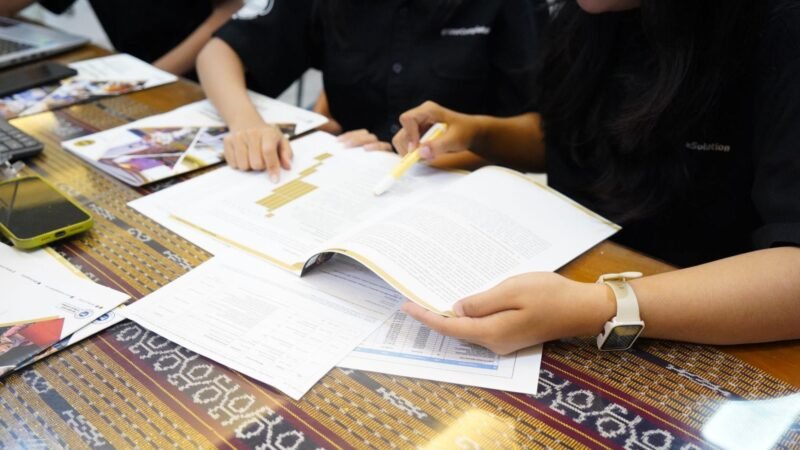
Understanding the distinct functions of copyediting and proofreading helps your institution save both time and money. Utilizing the right service ensures your documents are handled appropriately: copyediting to mature the substance, and proofreading to repolish the final details for a flawless, error-free finish.
Whatever stage of manuscript editing you require, ensure your official files are processed with the highest level of precision alongside a reliable service provider.
Need help ensuring your documents are error-free and easy to understand?
#BahasaGlobalTeam is ready to support your institution’s administrative needs, whether for periodic reports, legal paperwork, or other organizational publication materials.
Consult your needs with us today!
📩 Email: info@bahasaglobal.com
🌐 Website: bahasaglobal.com