


When Do You Need Sworn Translation?
Foreign-language documents cannot always be used immediately for official purposes. The receiving institution may require them to be translated into a specific language by a sworn translator.
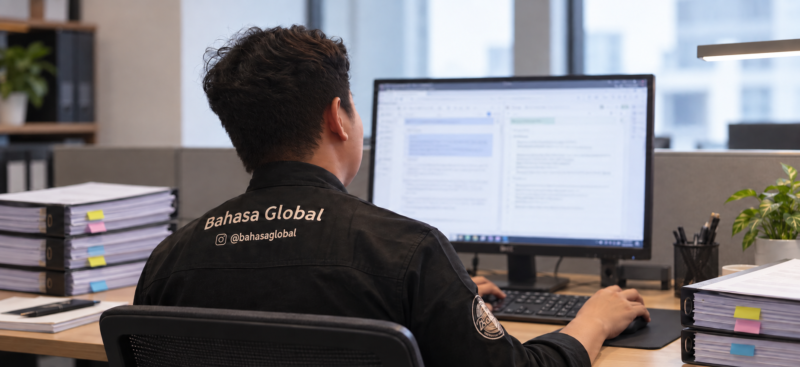
#BahasaGlobalTeam manages large-scale sworn translation projects
However, not all official documents automatically require sworn translation. The requirements depend on the intended use, destination country, and policies of the receiving institution.
The same document may be subject to different requirements. A diploma used for internal reference may only require general translation. However, a diploma submitted for immigration or university admission may require a specific type of translation.
Therefore, confirm the requirements with the receiving institution before starting the translation process. This helps you avoid choosing the wrong service and reduces the risk of having the document translated again.
Before exploring the situations in which you may need this service, let us first understand what sworn translation means.
What Is Sworn Translation?

In Indonesia, sworn translation is performed by a translator who has been officially appointed, sworn in, and registered in accordance with Minister of Law Regulation Number 4 of 2025. The translated document includes the translator’s certification as a form of professional accountability.
Nevertheless, sworn translation does not automatically guarantee that a document will be accepted. The applicable requirements remain subject to the policies of the relevant embassy, university, court, company, or other receiving institution.
In general, sworn translation is required when the receiving institution requests an official translation certified by a sworn translator.
Here are five situations in which your documents may require sworn translation.
1. Legal and Official Administrative Proceedings
Documents used in legal or official administrative proceedings may require sworn translation. This requirement usually applies when foreign-language documents must be submitted to an institution that operates in another language.
These documents may include contracts, powers of attorney, deeds, court decisions, written evidence, or corporate documents. However, the actual requirements are determined by the receiving institution.
Accuracy is essential because a single term may carry specific legal implications. Names, figures, dates, document numbers, and references to legal provisions must also be carefully checked.
Before starting the translation, ask whether the institution requires digital or printed copies. You should also check whether signatures, stamps, legalization, or supporting documents are required.
2. Visa Applications and Immigration Purposes
Visa applications and immigration procedures often involve personal documents issued in the applicant’s country of origin. If these documents are in another language, the relevant authority may require them to be translated according to specific requirements.
The required documents may include birth certificates, family cards, marriage certificates, diplomas, employment letters, or police clearance certificates. The exact documents depend on the visa category and purpose of travel.
Requirements vary between countries. Some institutions may request sworn translations, certified translations, or translations completed by translators registered with a particular authority.
Therefore, consult the official document checklist provided by the embassy or immigration authority. Make sure that the spelling of names and all dates match the information in the passport and supporting documents.
3. Studying Abroad
Applications for universities, scholarships, or exchange programs may require academic documents in a specified language. These documents are generally used to assess the applicant’s educational background and qualifications.
Documents that may need to be translated include diplomas, academic transcripts, certificates, syllabi, and academic letters. Some institutions may also specify particular formatting or submission procedures.
Translating academic documents involves more than transferring text from one language to another. Course names, degrees, grading systems, and institutional information must be translated consistently.
However, each university may have different requirements. Confirm whether the institution accepts sworn translations from Indonesia or requires another type of translation.
4. Working or Relocating Abroad
Working or relocating to another country may involve immigration, employment, and professional qualification documents. Some of these documents may need to be translated by a sworn translator.
Examples include diplomas, competency certificates, employment reference letters, professional licenses, employment contracts, and police clearance certificates. Civil documents may also be required for accompanying family members.
Requirements may be determined by employers, immigration authorities, or professional bodies. Each party may specify a different type of translator or translation format.
You should also check the validity of the original documents. An accurate translation cannot replace a document that has expired or does not meet the applicable administrative requirements.
5. Marriage and Family Matters
Cross-border marriages and family status procedures often require documents to be exchanged between different jurisdictions. Language differences may make sworn translation necessary.
The documents requested may include birth certificates, certificates of single status, marriage certificates, divorce certificates, or death certificates. Documents concerning children, adoption, and custody may also require translation.
Consistency of personal information is particularly important. Differences in the spelling of names, places of birth, or dates may delay the document verification process.
Before ordering a translation, confirm the document requirements with the civil registry office, embassy, or receiving institution.

Discuss Your Translation Needs with Bahasa Global!

General and sworn translation services for a wide range of official and international documents. These five situations may involve different requirements depending on the country, institution, and intended use of the documents. Therefore, confirm the appropriate type of service before beginning the translation process.
Still unsure whether your document requires sworn translation or general translation?
Share the document type, language pair, destination country, receiving institution, and required deadline with us. This information will help our team assess the most suitable service for your needs.
#BahasaGlobalTeam is ready to support your document translation needs accurately, securely, and professionally for various official and international purposes.
Discuss your translation needs with us today!
📩 Email: info@bahasaglobal.com
🌐 Website: bahasaglobal.com