Frequently Confused: The Differences Between a Translator and an Interpreter
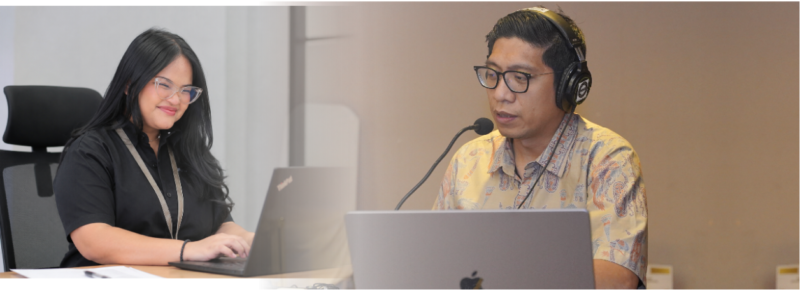
A Bahasa Global interpreter at work
The term “translator” is often used by the general public to describe anyone skilled in foreign languages.
However, in the professional realm, there is a clear distinction between a translator and an interpreter.
The fundamental difference between the two lies not merely in language proficiency, but in the medium of work, process workflow, instruments, and core skills utilized.
An interpreter performs the task of interpretation by rendering spoken messages directly as communication takes place, requiring quick thinking and instantaneous responses.
Meanwhile, a translator focuses on translating written texts, allowing for a deeper work process involving thoroughness, vocabulary research, and sentence structure refinement.
By recognizing these functional and media differences, the public can better understand that spoken interpretation and written translation actually require vastly different technical skills.
To gain a deeper understanding of how these two professions operate, here are four key differences that set a translator’s and an interpreter’s performance apart:

Written vs. Spoken Medium
- Translator: Focuses on the written medium. The main task is to translate written documents from the source language to the target language while maintaining the context, meaning, and writing style.
- Interpreter: Focuses on the spoken medium. An interpreter is responsible for translating conversations or speeches delivered live during a meeting, conference, or seminar.
Workflow and Response Speed
- Translator: Features a workflow that allows flexibility to research terms, check dictionaries, proofread, copyedit, and format documents before submission to the client.
- Interpreter: Works in real-time. An interpreter must be able to listen, comprehend, and translate a speaker’s words either simultaneously (interpreting concurrently with the speaker) or consecutively (when the speaker pauses) without any time lag to check references.
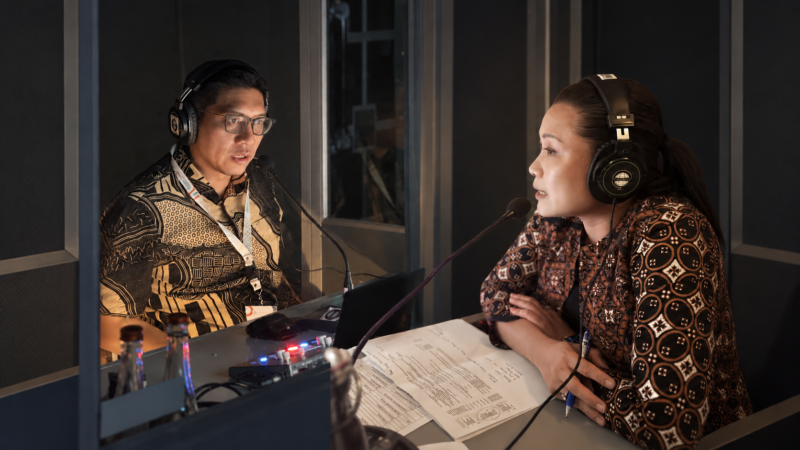
A professional Bahasa Global interpreter on duty, delivering real-time multilingual communication to ensure smooth interactions at every international event.
Tools and Technology Used
- Translator: Relies on computers, computer-assisted translation (CAT) software, editing platforms, and digital glossaries.
- Interpreter: Uses specialized audio equipment, such as a Simultaneous Interpretation System (SIS), soundproof booth, delegate headsets, microphones, and Remote Simultaneous Interpretation (RSI) platforms for online events.
Qualifications and Key Skills
- Translator: Requires high precision in grammar, comprehension of written structures, technical context research skills, and text editing expertise.
- Interpreter: Requires extremely fast information processing, high concentration, strong short-term memory, sharp hearing, and high self-confidence when speaking in public.
With this in mind, they can choose language services more carefully to align with their communication goals.
When Do You Need a Translator or an Interpreter?
As a practical guide, you can choose the type of language service based on the following event or document needs:
Choose Translation Services if you need:
- Translation of legal documents, business contracts, regulations, and official document legalization through a Sworn Translator.
- Translation of financial reports, feasibility studies, technical manuals, and corporate reports.
- Translation of books, novels, literary manuscripts, scientific articles, journals, and other creative publication materials.
- Localization of website content, applications, marketing materials, and written training materials to make them culturally relevant to the target market.
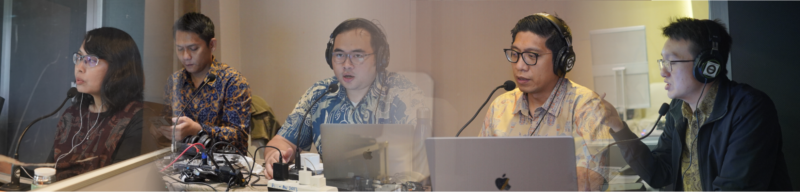
Choose Interpretation Services if you need:
- Interpretation for international conferences, seminars, symposia, or diplomatic forums (onsite, virtual, or hybrid).
- Interpretation for business meetings, bilateral talks, high-level negotiations, or exclusive interviews.
- Interpretation for training sessions or site visits.
- Interpretation for court proceedings, police questioning/legal investigations, medical consultations, or official protocol events.
Bahasa Global: Integrated Spoken and Written Communication Solutions

Choosing the right language service provider is a strategic step to ensure your message is delivered accurately and professionally.
Bahasa Global stands as a trusted language service and event support provider certified under SNI ISO 9001:2015 and MICE standards. Upholding the commitment of “Your Complete Solution,” Bahasa Global provides integrated language communication services:
- Document Translation Services: General and sworn document translation services, complete with proofreading, copyediting, and formatting processes.
- Interpreting Services & Equipment: Experienced professional interpreters for onsite, virtual, or hybrid events, supported by in-house SIS (Simultaneous Interpretation System) equipment to guarantee the best sound quality.
- Event Support Services: Event support services such as Note Taking, Fast Typists, sign language interpreters, and media dissemination consultation.
Trust your language communication and event needs to the #BahasaGlobalTeam. Visit www.bahasaglobal.com to get a free consultation on the best language solutions for your business.
📩 Email: info@bahasaglobal.com
🌐 Website: bahasaglobal.com